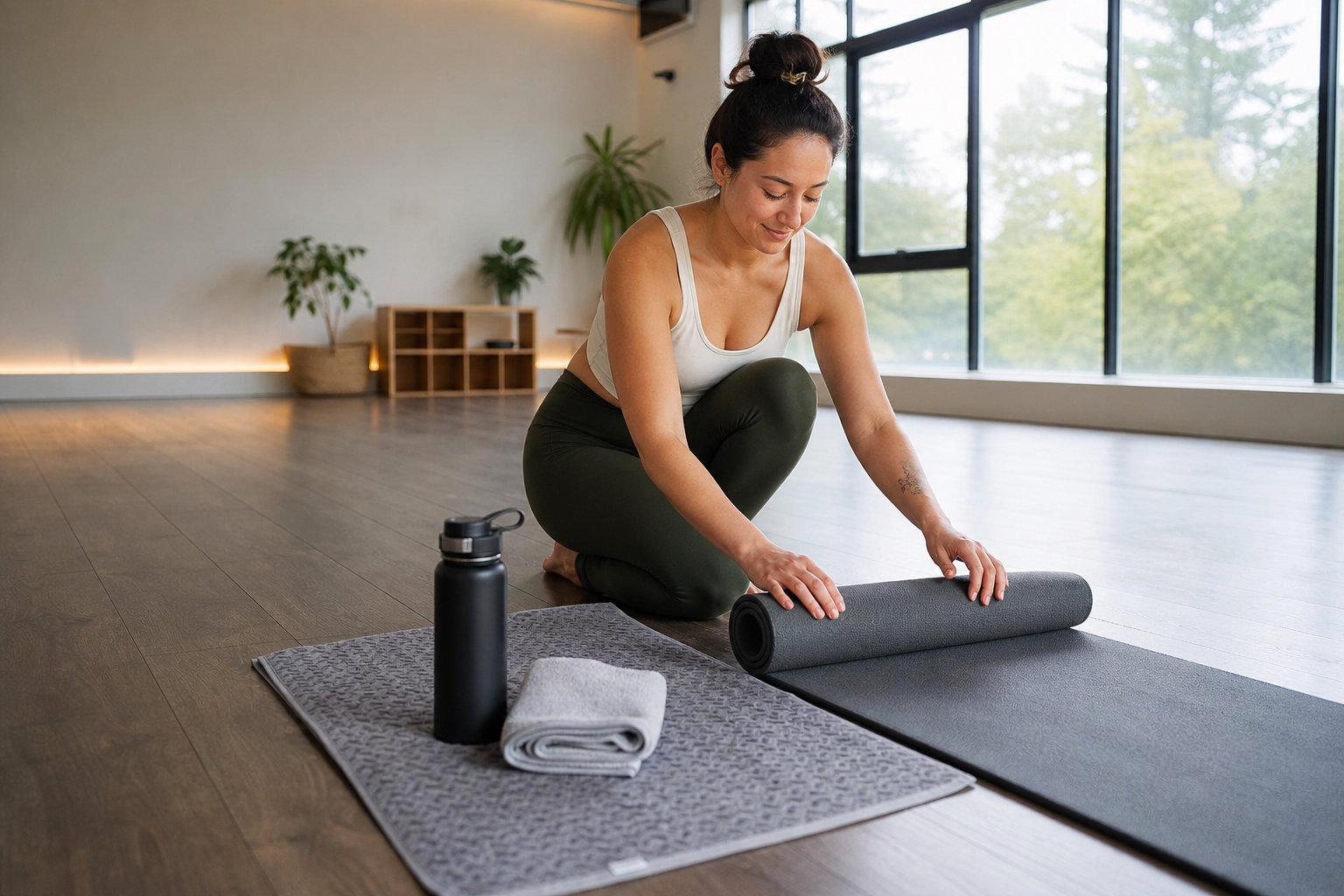
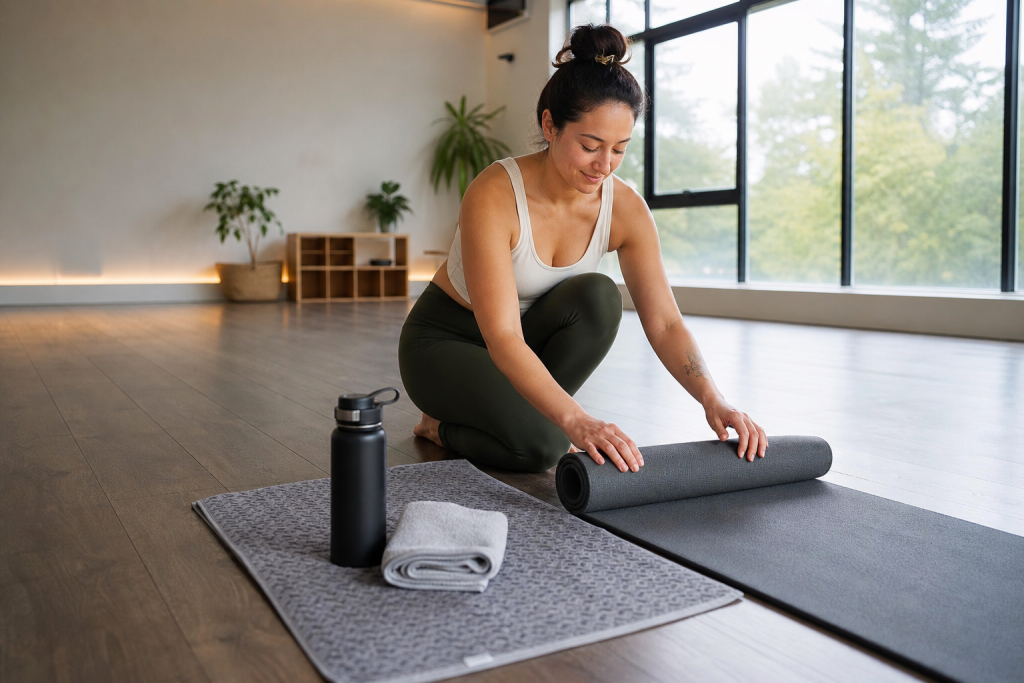
Before your first hot yoga class in Kitsap, ask how hot the room gets, whether humidity is added, how fast the class moves, and whether the instructor recommends it for beginners. Bring water, a yoga mat, a towel, and light exercise clothing. Preregister if required and arrive early enough to meet the instructor without rushing.
Those details matter because “heated yoga” can describe very different experiences. A gently warmed room may feel little different from an ordinary exercise studio, while some hot classes reach much higher temperatures and include demanding sequences. The class description—not the word “hot” alone—is the best place to start.
What is the difference between hot, heated, and non-heated yoga?
| Class environment | What it generally means | Best for |
|---|---|---|
| Hot yoga | A deliberately hot room, sometimes with controlled humidity. Temperature, sequence, and pace vary. | People who have confirmed the conditions and are comfortable exercising in substantial heat. |
| Gently heated or warm yoga | A mildly warmed room that may accompany flow, alignment, or slower classes. | Beginners who want to try warmth without selecting the hottest available class. |
| Non-heated yoga | No intentional high-heat environment, although normal room temperature varies. | Beginners who want to learn poses and pacing without heat adding another challenge. |
Local descriptions illustrate this range. Kitsap Hot Yoga in Poulsbo states that it offers both heated and non-heated yoga, along with barre and Pilates. In nearby Gig Harbor, Asha Yoga’s class descriptions say its room temperature varies by class; its Hot 26 description specifies 105 degrees with 40% humidity. Tuladhara Yoga’s FAQ, by comparison, describes its rooms as generally gently heated between 70 and 75 degrees, with Yin and Restorative classes tending toward room temperature.
These examples show why someone searching for hot yoga near Poulsbo, Silverdale, Bremerton, Bainbridge Island, Port Orchard, Kingston, or Gig Harbor should compare actual class conditions rather than assume all heated classes are alike.
What should you ask before booking hot yoga?
Contact the studio or read its current class description and ask these five questions:
- What temperature should I expect? Ask for the usual range rather than simply asking whether the room is heated.
- Is humidity added? Temperature does not tell you everything about how the room may feel.
- How fast does the class move? A fixed sequence, slower class, and fast vinyasa flow create different beginner experiences.
- Is this specific class suitable for a first-time student? “All levels” does not necessarily mean that every beginner will find the pace comfortable.
- May I rest or leave the room if needed? Learn the studio’s procedure before class starts.
Also confirm the session length, registration procedure, cancellation policy, mat or towel rental options, and when the doors close. These operational details can change, so check them directly on the day you book.
What should you bring to your first hot yoga class?
- Water: Bring a bottle you can open easily. Begin class normally hydrated rather than trying to catch up after it starts.
- Yoga mat: Confirm whether you need your own or whether rentals are available.
- Mat towel or nonslip yoga towel: Sweat can make some mats slippery.
- Small towel: Useful for your face and hands.
- Light, comfortable exercise clothes: Choose clothing that permits movement and does not become distracting when damp.
- Dry change of clothes: Particularly useful if you have a drive or ferry connection after class.
- A simple plan for valuables: Follow the studio’s storage rules and avoid bringing unnecessary items.
Do not assume a studio supplies mats, towels, showers, lockers, or drinking-water stations. Ask before leaving home.
When should beginners arrive?
A practical target is 10 to 15 minutes before class, unless the studio gives different instructions. That allows time to check in, locate the room, arrange your mat, and tell the instructor that this is your first heated class.
Arrival rules differ. Kitsap Hot Yoga currently asks students to preregister, arrive a few minutes early, and notes that its doors lock after class starts. Tuladhara says its doors open 15 minutes before class and lock at the scheduled start. Always follow the policy of the studio you are attending.
Leave extra travel time if you are coming from Kingston, Suquamish, Hansville, Indianola, Seabeck, Port Gamble, Manchester, Southworth, Belfair, Port Townsend, or another community that may involve ferry, bridge, or highway traffic. Arriving overheated and rushed is not an ideal beginning.
How should you approach the class once it begins?
- Choose a practical mat position. Ask the instructor where a beginner should set up and where the exit is.
- Start conservatively. You do not have to match the depth, speed, or range of motion of nearby students.
- Use the offered modifications. A simpler version is still participation.
- Rest when necessary. Pause if you cannot maintain control or feel unwell.
- Stand up gradually. Moving quickly from the floor to standing may contribute to light-headedness.
- Tell the instructor if you need help. Do not try to hide concerning symptoms to finish the sequence.
Yoga may support areas such as flexibility, strength, balance, and relaxation, but evidence varies by outcome and yoga carries injury risks like other exercise. Heat also adds physical stress. Treat your first class as an introduction, not a test of endurance.
When should you stop exercising in the heat?
The Centers for Disease Control and Prevention advises people exercising in heat to pace activity, drink water, and stop activity and move to a cool place if they feel faint or weak. Other possible signs of overheating include unusual heavy sweating, cramps, headache, dizziness, nausea, shortness of breath, or weakness.
Confusion, altered behavior, loss of consciousness, or other signs of possible heat stroke require emergency help. Do not rely on “pushing through.”
People who are pregnant, older, taking medicines that may affect heat tolerance or hydration, or living with heart disease or another chronic condition may need individualized advice before exercising in substantial heat. Ask a qualified healthcare professional when appropriate, and tell the studio about relevant limitations without expecting the instructor to diagnose or treat them.
What is the best first hot yoga class in Kitsap?
The best first class is not automatically the coolest or shortest. It is the one for which you can obtain clear answers about temperature, humidity, pace, sequence, rest options, and beginner suitability.
If the answers leave you uncertain, begin with non-heated yoga or a gently warmed beginner class. Learning basic movements and recognizing your normal exercise response can make it easier to decide whether a hotter class suits you later.
First hot yoga class: quick checklist
- Read the current class description.
- Confirm temperature, humidity, pace, and duration.
- Ask whether the class is recommended for beginners.
- Check registration, arrival, cancellation, and door-locking rules.
- Confirm what equipment is supplied or rented.
- Bring water, a mat, and towels.
- Wear light exercise clothing.
- Arrive early and introduce yourself to the instructor.
- Know where you can cool down if necessary.
- Stop if you feel faint, weak, confused, or otherwise unwell.
Frequently asked questions
Do I need previous yoga experience for hot yoga?
Not always, but beginner suitability depends on the specific temperature, pace, and sequence. Ask about the exact class rather than relying only on an “all levels” label.
Should I eat before hot yoga?
Avoid experimenting with an unusually large meal immediately before class. Because people tolerate food and exercise differently, follow your normal needs and seek professional guidance if you have a condition affecting nutrition or blood sugar.
Is sweating more evidence of a better yoga session?
No. Sweating is a cooling response and varies among people. It does not show how effectively you performed the poses or what benefit you received.
Where can I check local class information?
Schedules, prices, introductory offers, and registration policies can change. Review official studio pages before every visit. Use Kitsap Yoga for all the latest news and info about yoga in Kitsap.